Copyright © 2024 - Sparkle IQ All Rights Reserved
The Four Cs
The 4Cs of diamonds are cut, color, clarity, and carat weight. They are the universal method for assessing the quality and value of any diamond. Each C has a specific way of being measured and graded. Their quality is recorded in a diamond grading report.
What is The Cut of a Diamond?
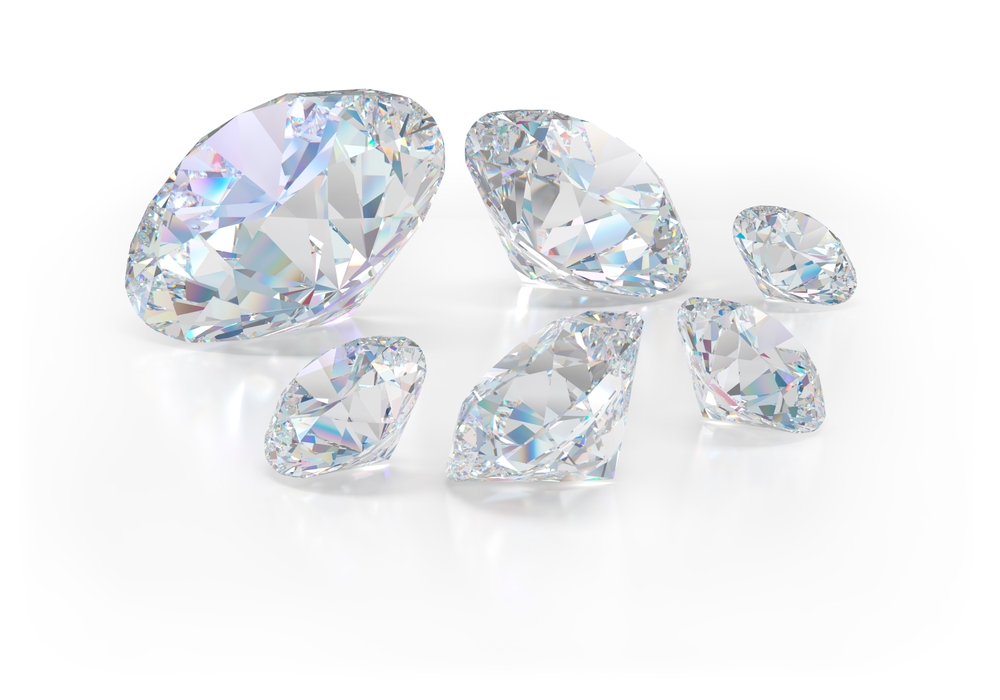
Have you ever noticed how many surfaces a diamond has? A diamond’s cut refers to how well-proportioned the dimensions of a diamond are, and how these surfaces, or facets, are positioned to create sparkle and brilliance. For example, what is the ratio of the diamond’s diameter in comparison to its depth? These small, yet essential, factors determine the diamond’s beauty and price.
No single diamond is perfect for everyone—but all of our customers, whether they’re eyeing a .50-carat or a 16-carat diamond, want as much sparkle as their budget allows.
Of the the 4Cs (cut, color, clarity, carat), cut has the greatest influence on a diamond’s beauty and sparkle. Even a diamond with a flawless clarity grade (no blemishes or inclusions) can look glassy or dull if the cut is too shallow or deep. So, when determining what diamond to buy, go with the best cut grade that you can afford.
What is Diamond Color
One of the 4Cs, diamond color is a measurable grade given to an individual diamond to quantify how colorless it is along a standardized diamond color chart. The higher-rated diamonds will be as close to colorless as possible, while lower-rated diamonds will often have an increasingly noticeable coloration tint as the ratings move along the color diamond scale chart. A colorless diamond is a clear gemstone while diamonds further down the diamond rating chart can have a warm hue to them.
It is very rare to find a diamond that doesn't give any color at all, many gem-size diamonds will have slight hues or coloration due to natural processes during the gemstone’s formation.
In fact, diamonds are found in almost any naturally occurring color, including gray, white, yellow, green, brown and pink. As more diamond deposits have been discovered, certain colorful stones have gained popularity. These fancy colored diamonds, such as canary diamonds, are prized for their unique colors.
What Is Diamond Clarity?
Diamond clarity is the assessment of small imperfections on the surface and within the stone. Surface flaws are called blemishes, while internal defects are known as inclusions. In most cases, a diamond’s beauty is not affected by these in any way since most inclusions can’t be seen with the naked eye.
When referring to inclusions, gemologists often use the term “internal characteristics” instead of flaws. Internal characteristics are what give a natural diamond its character. It’s also important to note that diamonds with the fewest and smallest inclusions receive the highest clarity grades—and higher price tags to reflect that.
Remember, all diamonds are unique, not perfect. They are made underground through enormous pressure and heat. Natural inclusions and blemishes are inevitable.
What Is A Diamond Carat?
The term carat is often misunderstood. It refers to a diamond's weight, not its size. Another misperception is that a larger carat weight is always better than a smaller carat weight.
While it’s true that a big rock can be a status symbol (here’s looking at you, Hollywood), carat weight is not related to sparkle. Beautiful sparkle is the result of a well-crafted cut. In fact, a high carat weight diamond with a poor cut may look smaller than a diamond with a smaller carat weight and a very good cut.
Diamonds with higher carat weights are cut from larger rough crystals that are harder to source than small crystals. So, the relationship between carat weight and price depends on the rarity or availability of a rough crystal. Carat price is also a function of finding rough crystals with desirable color, and internal and external characteristics that will positively influence clarity when the diamond is cut.
FAQs
Delve into our FAQ to find answers to our frequently asked questions.